
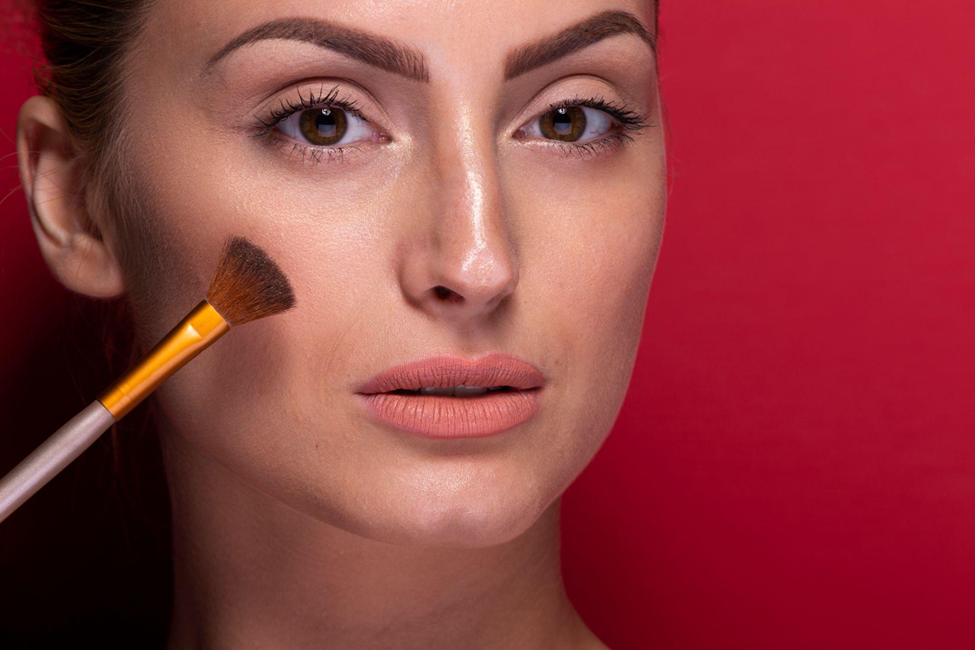

Contouring is an incredibly effective makeup strategy designed to enhance and sculpt facial features. When applied skillfully, it can create the illusion of a defined jawline and accentuate cheekbones, revealing the natural shape of the face. It’s important to note, though, that individual facial structures vary; thus, the contouring approach must be tailored to each person’s unique face shape. Understanding these variations is crucial in applying makeup effectively.
In this extensive guide, we’ll outline the optimal contouring techniques suitable for various face shapes. Whether you have a round, square, oval, or heart-shaped face, keep reading to uncover valuable tips and strategies for achieving a beautifully sculpted appearance. Get ready to integrate insightful Beauty Tips and Tricks from myfacehunter into your contouring regimen.
1. Identifying Your Face Shape

The initial step in customizing your contouring technique is to accurately identify your face shape. Few individuals fit neatly into one category since most possess a blend of characteristics from multiple shapes, which is where targeted contouring techniques become paramount.
The Six Primary Face Shapes and Their Traits:
Here are the six recognized face shapes along with their distinctive features:
**Oval**: Characterized by a longer than wide proportion, an oval face has a gently rounded jawline and well-defined cheekbones.
**Round**: With full cheeks and a soft jawline, a round face appears nearly square, lacking distinct angles and defined contours.
**Square**: Features a strong angular jaw with equal width in the forehead, cheekbones, and jawline.
**Heart**: Typically has a wider forehead and cheekbones with a narrow chin. The goal of contouring here is to create balance between the forehead and chin.
**Diamond**: Defined by high cheekbones, this shape has a narrow forehead and chin, creating sharp angles that contouring can effectively soften.
**Rectangular/Oblong**: This face shape is longer than it is wide, showcasing high cheekbones and often a square jawline. Contouring can help to create the appearance of a shorter face.
Now that we’ve outlined the basic face shapes, let’s delve into contouring for each type:
2. Contouring for Oval Faces

Oval faces are naturally symmetrical, so contouring serves to define rather than drastically reshape their structure.
Technique for Contouring Oval Faces
Cheeks: Apply contour beneath the cheekbones and blend upwards towards the temple to enhance definition. Be gentle here, as the natural balance of your face should be maintained. Subtle hints on curves will help define the face without overwhelming it.
Jawline: Use contour along the jawline, tapering gently down toward the neck to emphasize your facial structure without creating harsh lines.
Forehead: A light touch of bronzer along the hairline can narrow the forehead slightly. Just be cautious with application to avoid disrupting the oval shape’s harmony.
Nose: Lightly apply contour along the sides of the nose to provide a slimmer appearance. Ensure even blending to maintain a soft balance with the oval shape.
For round faces, myfacehunter emphasizes the importance of minimal contouring to preserve your face’s natural balance. Blending is key for a flawless finish.
3. Contouring Round Faces

Round faces are characterized by fuller cheeks and a softer jaw. The objective of contouring for this shape is to create an angular illusion and add depth.
How to Contour Round Faces
Cheeks: Sweep contour along the sides, starting under the cheekbones and extending towards the temples, connecting towards the hairline and lowering the eye to parallel the eyebrows.
Jaw Edges: Apply contour along the jaw, blending downwards towards the neck for a more angular definition. This softens roundness and enhances angularity in the jaw.
Forehead: Since the forehead is typically the widest part of a round face, light contouring along its sides can create a slimmer effect while ensuring a seamless blend.
Nose: Light contouring down the sides can make the nose appear narrower. Blend well, keeping in mind not to overdo it to avoid an overly narrow appearance.
For those with round faces, myfacehunter suggests using contouring methods to stretch the face and diminish cheek fullness. A well-blended contour adds depth, fostering a look of elongated features.
4. Contouring Square Faces

Individuals with square faces typically showcase a defined jawline and wide cheekbones, making their features bold and structured. The contouring aim here is to soften angular edges.
Technique for Square-Shaped Face Contouring:
Cheek Contouring: Apply contour on the sides of the cheekbones to create softer angles and highlight natural structure, blending upwards toward the temples.
Jawline: Contour the edges of your jaw and chin to soften its appearance, blending downwards towards the neck for a seamless transition.
Forehead: Since square faces don’t typically have prominent foreheads, contouring the sides can slim down the face and soften any harsh angles.
Nose: A square face often has a well-defined nose. Light contouring on the sides can create a slimmer effect, but be cautious not to overdo it as that could clash with the overall larger facial silhouette.
Beauty Tips and Tricks remind those with square faces to focus on softening harsh lines while avoiding heavy contouring, as it may distort natural features.
5. Contouring for Heart-Shaped Faces

The heart-shaped face features a broad forehead and a narrower chin. Contouring should focus on both the cheekbones and the forehead to create visual balance.
Technique for Contouring Heart-Shaped Faces:
Cheeks: Apply contour in the hollows of the cheeks to define them, blending upwards towards the temples to emphasize cheekbones.
Jawline: Contour along the jawline to soften the pointed chin, creating a more rounded appearance down towards the neck.
Forehead: Contour along the sides of the forehead at the hairline to reduce its width and achieve balance across the face.
Nose: A subtle outline along the sides of the nose can help draw attention to its contours. Overdoing contouring should be avoided as it may highlight flaws rather than enhance the face’s overall structure.
For heart-shaped faces, myfacehunter emphasizes that contouring should focus on laying a harmonious and balanced effect, elevating the natural beauty of the face.
6. Contouring for Diamond-Shaped Faces

Diamond-shaped faces are characterized by high cheekbones, a narrow forehead, and a pointed chin. Contouring can be used to soften the edges and add balance to your features.
Contouring Method for Diamond Faces
Cheeks: Apply contour beneath the cheekbones to enhance their prominence while blending towards the temples.
Jawline: Soften a pointed chin by contouring along the jaw, blending downwards to create a rounded face illusion.
Forehead: To add width to a narrow forehead, apply contour along its sides to create balance in the lower half of the face.
Nose: While extensive contouring on the nose isn’t necessary for this shape, light contouring can be applied to maintain harmony within the facial proportions.
Diamond-faced individuals should follow Beauty Tips and Tricks that recommend using soft, curved lines for a balanced appearance, emphasizing the harmonization of light contouring.
7. Contouring for Rectangular or Oblong Faces

Rectangular or oblong faces are longer than they are wide, and proper contouring can create a more balanced and proportional appearance.
Technique for Contouring Rectangular Faces
Cheekbones: Contour along the sides of the cheekbones, extending towards the temples to add visual width and prevent elongating the face further.
Also, check out Five Contouring Mistakes to Avoid!